
Key takeaway: The Foxfire Diamond is a 187.63 carat rough diamond pulled from the Diavik mine in Canada’s Northwest Territories in 2015. It is the largest gem-quality rough diamond ever recovered in North America, and it nearly never survived to be named at all.
Few stones carry a story as improbable as the Foxfire Diamond. It is not an ancient gem with centuries of royal owners behind it. It is a modern discovery, dug from frozen Arctic ground, that should by every rule of the mine that found it have been destroyed within seconds of reaching the surface. Instead it slipped through the machinery, kept its odd shape, and went on to share a gallery with the Hope Diamond. This is the real account of the Foxfire, the diamond that earned its place through luck as much as size.
At The Gold Avenue, our work centres on diamonds far smaller and far closer to home. We are a luxury watch, gold and diamond exchange in Illovo, Sandton, and we buy diamond jewellery from the public every working day. Understanding what makes a stone like the Foxfire so remarkable also sharpens how we look at the diamonds people bring to our counter. So let us tell the story properly.
The Origins and Discovery of the Foxfire Diamond
The Foxfire Diamond was recovered in August 2015 at the Diavik Diamond Mine, a remote operation located above the Arctic Circle in Canada’s Northwest Territories. Diavik sits on an island in a sub-Arctic lake, accessible by an ice road for only part of the year, which makes it one of the most isolated major diamond mines on earth.
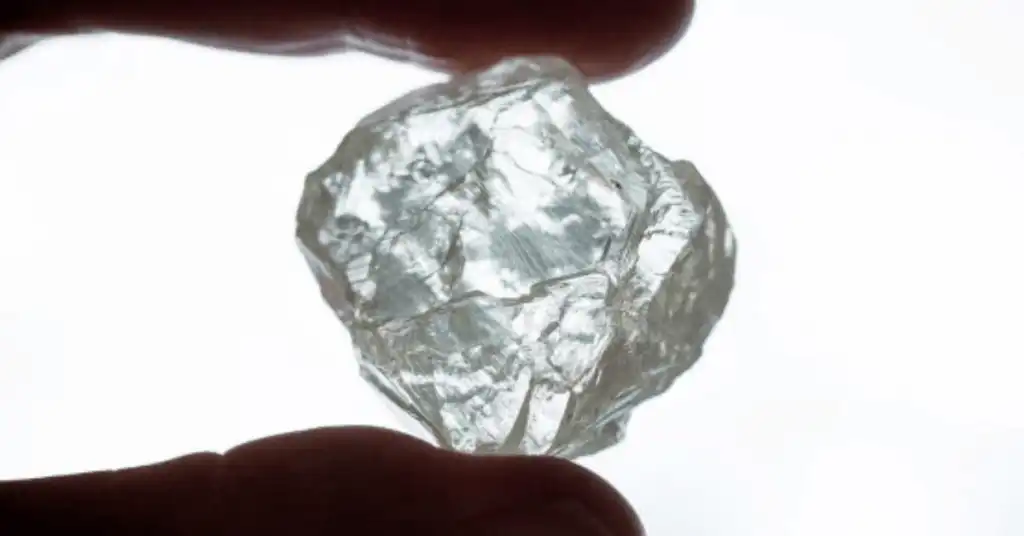
The name itself nods to that frozen origin. “Foxfire” refers to an old northern phrase describing the glow of starlight and the aurora over the snow, a fitting label for a stone born so far north. From the moment it was named, the Foxfire was tied to the harsh and beautiful landscape that produced it.
The stone that should have been crushed
The most astonishing part of the Foxfire story is that it almost never existed as a gem. For the decade before its discovery, the diamonds coming out of Diavik generally peaked at around six carats. Larger gem-quality stones simply were not expected from that ground. Because of this, the mine’s processing equipment was set up to sift out anything smaller than six carats and to pulverise the larger material that came through.
By that logic, a 187.63 carat rough should have been crushed to gravel the instant it entered the crusher. It survived for one reason. The Foxfire has an uncommonly flat, elongated shape, and that flatness let it pass through the filters meant to catch and destroy oversized stones. A stone of a more typical rounded form would never have made it out intact. The largest gem-quality rough diamond ever found in North America owes its survival to a quirk of geometry.
The Characteristics of the Foxfire Diamond
At 187.63 carats in its rough state, the Foxfire is a genuinely enormous diamond. To picture the scale, most engagement-ring diamonds sold across Johannesburg sit well under two carats, so the Foxfire carries the weight of dozens of typical jewellery stones in a single piece of crystal.
- Weight: 187.63 carats as recovered, in rough uncut form.
- Origin: The Diavik mine, Northwest Territories, Canada, a source known for clean, high-quality diamonds.
- Shape: Distinctly flat and elongated, the very feature that saved it from the crusher.
- Colour: A gentle pale yellow tone, which became more apparent once the rough was studied and later cut.
- Status at discovery: The largest gem-quality rough diamond ever mined in North America.
What sets the Foxfire apart is not a single dramatic feature but the combination of size, clean Canadian provenance and the sheer unlikelihood of its survival. A rough diamond of that scale carries enormous potential for the cutter who eventually takes it on.
Why the Foxfire Is So Rare
Rarity in the diamond world comes down to a few simple realities. Large gem-quality rough is extraordinarily uncommon. The vast majority of diamonds mined anywhere are tiny, included or suitable only for industrial use. A clean stone heavy enough to be measured in the hundreds of carats is a once-in-many-years event for any mine.
The Foxfire layers a second kind of rarity on top of the first. North America has never been the world’s great diamond region in the way southern Africa, Russia or Australia have been. For a continent that produces comparatively few gem diamonds to yield its single largest rough specimen, and for that specimen to slip past machinery designed to destroy it, makes the Foxfire close to unrepeatable. It is a record holder by weight and a survivor by accident at the same time.
From Rough Stone to Finished Gems
A rough diamond, however large, is only the beginning of the story. The Foxfire spent time on public display before it was ever touched by a cutter. From November 2016 into 2017 it appeared at the Smithsonian’s National Museum of Natural History in Washington, shown in the Harry Winston Gallery alongside the famous Hope Diamond. For a modern, recently mined stone to share that space with one of the most storied gems in the world says a great deal about the Foxfire’s significance.
In June 2016 the rough was acquired through an international auction by a private investment group. After its museum appearances, the Foxfire was studied, planned and cut. The single great rough became a matched pair of pale yellow earrings with a combined weight in the region of seventy-eight carats, which later sold at a major auction house for well over a million United States dollars. One improbable survivor became two wearable jewels, and the gravel pile it should have ended up in was forgotten entirely.
What the Foxfire Teaches Us About Your Own Diamonds
The Foxfire is a long way from Sandton, both in distance and in scale. Yet the principles behind its value are exactly the ones we apply at The Gold Avenue when someone walks in with a diamond ring, a pair of earrings or a loose stone to sell.
- Weight is measured precisely, never estimated. Carat weight is the foundation of any honest valuation, just as the Foxfire’s 187.63 carats define its place in history.
- Colour matters. The Foxfire’s pale yellow is part of its character. Every diamond sits somewhere on a colour scale, and that position influences value.
- Cut and condition shape the outcome. A rough stone becomes valuable only once skilled work is done. The quality of cutting and the present condition of a stone both affect what it is worth.
- Provenance and the live market set the number. Clean Canadian origin lifts a stone like the Foxfire. For everyday diamonds, current market demand and the live gold and diamond market set the realistic figure.
You do not need a record-breaking rough to deserve a fair, transparent assessment. Whether your diamond is a family heirloom or a piece you no longer wear, the same careful approach applies.
Sell Your Diamonds and Gold with The Gold Avenue
The Gold Avenue is a luxury watch, gold and diamond exchange that buys directly from the public. We purchase diamond jewellery, gold jewellery, Krugerrands, gold coins and luxury watches, and we built the business to be a transparent, five-star alternative to the traditional pawn-and-gold-buying trade in Johannesburg.
Our process is straightforward and there is no obligation to sell once you have your offer:
- Get in touch. Contact our team by phone, WhatsApp or online chat to start the conversation.
- Book a valuation. Bring your items to our premises in Illovo at a time that suits you.
- Receive your offer. Your diamonds, coins or jewellery are weighed and tested in front of you, then priced against the live gold and market price and the condition of each piece.
- Get paid the same day. Accept the offer and receive payment by cash or EFT on the spot.
Because we work with an international dealer network, particularly in the UAE, we are able to pay local sellers more competitively for their gold, diamonds and watches.
Visit us: Illovo Point, 68 Melville Road, Illovo, Sandton, 2196.
Call: 010 109 0080
WhatsApp: 076 393 5429
Frequently Asked Questions
How big is the Foxfire Diamond?
The Foxfire Diamond weighed 187.63 carats in its rough, uncut state. That makes it the largest gem-quality rough diamond ever recovered in North America, far larger than the diamonds typically found at the Diavik mine where it was discovered.
Where was the Foxfire Diamond found?
It was recovered in August 2015 at the Diavik Diamond Mine in Canada’s Northwest Territories, a remote operation above the Arctic Circle. It almost did not survive, as the mine’s equipment was set to crush oversized stones, and only its flat shape let it pass through intact.
What happened to the Foxfire Diamond after it was displayed?
After being shown at the Smithsonian alongside the Hope Diamond, the rough was acquired by a private buyer and later cut into a matched pair of pale yellow earrings weighing roughly seventy-eight carats in total. Those earrings later sold at auction for well over a million United States dollars.
Can I sell my diamond jewellery in Johannesburg?
Yes. The Gold Avenue buys diamond jewellery from the public at our Illovo premises in Sandton. We weigh and test your items in front of you, make an offer based on the live market and the condition of each piece, and pay the same day by cash or EFT if you accept.
Learn More
At The Gold Avenue, we simplify the process of selling your valuable assets. From luxury watches and Krugerrands to gold, diamond jewellery, and more, we offer fast, safe, and convenient buying services, coupled with an enjoyable experience. We stand by our promise to provide the best price for your items.
Krugerrands: Sell your Krugerrands swiftly and securely.
Gold Jewellery: Turn your gold jewellery into instant cash.
Gold Coins: Get the best price for your gold coins.
Diamonds: Exchange your diamonds for a competitive price.
Watches: Luxury watches like Rolex and others are welcome.
In need of a cash loan? We’ve got you covered.
Selling to The Gold Avenue is simple:
Contact Our Team: Reach out to our team via call, WhatsApp, or online chat. Describe the luxury items you want to sell.
Book an Appointment: Set a valuation appointment at a time convenient to you. Our safe and secure premises are located in Johannesburg.
Get an Offer: Our expert team will provide a quick and fair valuation. We’re committed to long-term relationships, guaranteeing the best price.
Money in Your Bank: We offer immediate payments, directly into your bank account, either through cash or EFT.
Ready to start selling? Book an Appointment

Trent Saldsman is the owner and managing director of The Gold Avenue, the luxury watch, gold and diamond exchange he built in Illovo, Sandton, and a nominee for the Eric Ellerine Entrepreneur Award in 2024. He founded The Gold Avenue to offer a transparent, five-star alternative to the traditional pawn-and-gold-buying trade, and works with an international dealer network, particularly in the UAE, to pay local sellers more competitively for their gold, diamonds and watches.